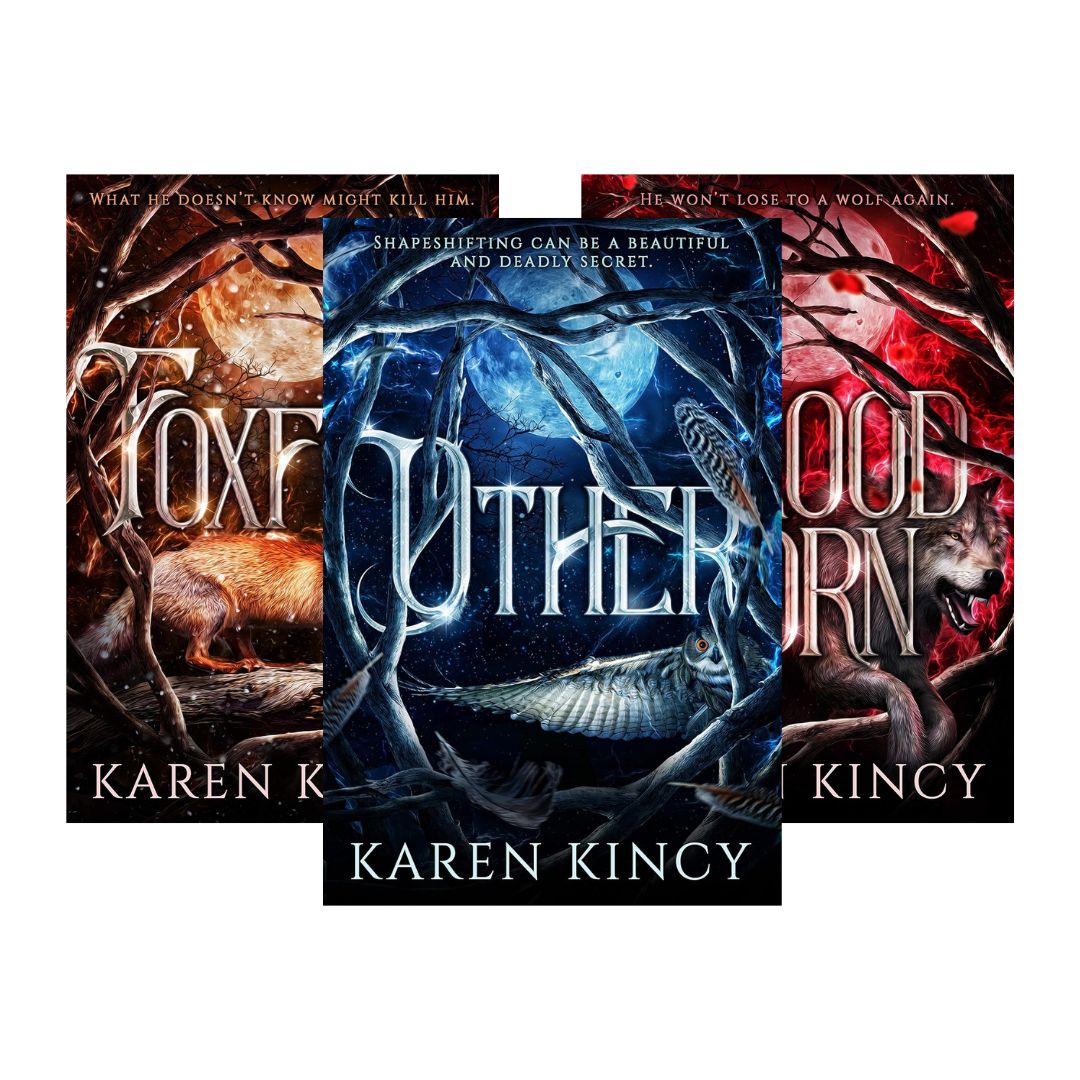
(A tiny teaser from Bloodborn, sequel to Other.)

The werewolves howl at night, taunting me in a triumphant chorus. Dad doesn’t hear them—he’s passed out drunk on the couch after a day talking to the hospital and the funeral home. I’m not going to any funeral, period.

I go downstairs like a walking statue, unfeeling, unthinking. In the garage, the musty, mousy smell twinges my hypersensitive nose. I can hear a rodent scratching in the wall, even the high squeaks it makes to its mate. I grab my coat, two boxes of rounds, and Dad’s favorite shotgun. I’m more than a match for the werewolves.

Sheer buzz compelled me to buy Beautiful Creatures, even though I usually refrain from buying new hardcovers and often shy away from bestsellers, having quirky tastes. This book, however, did not disappoint. Rather, it has cemented in my mind what I now consider one of the unfailing, essential truths of its genre: good fantasy isn’t about the magical, but the mundane.

What do I mean by that? Think about it. When you read fantasy, particularly that set in the modern world, you expect a balance between the normal and the paranormal. But it’s more than that. Too many boring grocery-shopping and tooth-brushing scenes, and the reader chucks the book against the wall. Too many arbitrary rules of magic and weirdly random creatures, and the reader stops caring. The key, I believe, is when the fantastic abstracts and amplifies the ordinary. In a nutshell, fantasy is one big metaphor that allows us to feel our ordinary lives more vividly. Beautiful Creatures demonstrates this brilliantly.

What I love most about this book: not the magic, curses, and creatures, but the way the authors detail the small-town life of Gatlin, South Carolina, right down to the gravy and biscuits Amma cooks, the way everyone in Gatlin talks about the Civil War as if it happened yesterday, and the yearning Ethan feels to escape this Southern tradition and small-mindedness. Amma’s cooking ability is echoed by her ability to cook up voodoo; the Civil War, by ancient conflicts between the magical families of Casters; the small-mindedness, by the way people treat the clearly different, magically gifted girl Lena.

Reading this book is like eating a layer cake. You get a big bite of real Southern life, then a taste of magic that isn’t overwhelmingly strong or sweet. These two flavors perfectly complement each other. Take out the magic, and you would still have a good novel, but perhaps not a great one. Take out the mundane, and the magic wouldn’t have nearly the same resonance. The whole effect is of an expertly crafted metaphor about love overcoming prejudice, and whether your past determines your future. All mixed up in one batch of Southern Gothic.

I won’t go into much of the plot, since it’s a long book and most of the fun comes from discovering all its secrets. I will, however, highly recommend you try a taste of Beautiful Creatures. I found it delicious.

I recently encountered two fellow authors with Flux who both have books coming out in 2010 with fabulous covers: A Blue So Dark by Holly Schindler and Light Beneath Ferns by Anne Spollen. I love these covers for their mysterious, misty look and rich colors. How about you? What covers are you drooling over?

next ›